---
title: What Is the Relevance of the Trade Cycle in Foreign Exchange Management?
description: Discover why your trade cycle timing matters in forex management. Learn how delays impact profits and how smart hedging protects against currency risks.
image: https://myforexeye.com/hubfs/Blog%2013.jpg
---
# What Is the Relevance of the Trade Cycle in Foreign Exchange Management?
[ Ritik Bali ](https://myforexeye.com/blog/author/ritik-bali) Jan 29, 2026 3:20:28 PM
### **Introduction**
Managing foreign exchange (forex) risks goes beyond getting the favorable rates. It’s about understanding the full journey of a business transaction—from receiving an order to finally collecting payment—and recognizing the role of time in currency fluctuations. This journey is called the trade cycle, and it plays a central role in whether your business gains or loses money in forex.
In this blog, we explore how the trade cycle affects foreign exchange decisions, why timing matters, and what companies can do to protect themselves.
## **What Is a Trade Cycle?**
The trade cycle, also called the operating or cash conversion cycle, is the time taken from receiving an order to completing production, shipping, and collecting payment. In international trade, this cycle involves additional risks due to currency movements during the timeline.
#### **4 Basic Phases of a Trade Cycle:**
**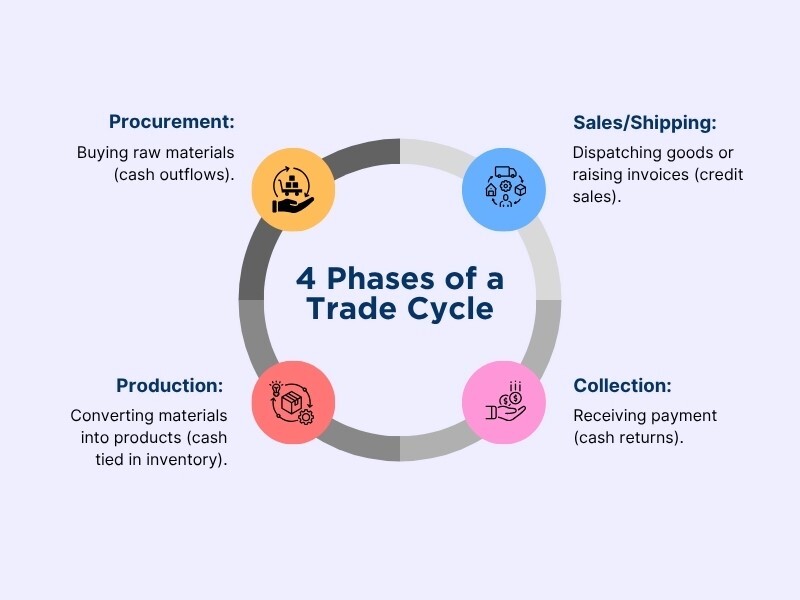**
1. **Procurement Phase** – Buying raw materials or goods. This involves cash outflows or payables.
2. **Production Phase **– Converting materials into finished products. This ties up cash in inventory.
3. **Sales/Shipping Phase **– Dispatching goods or raising invoices. Sales might be on credit.
4. **Collection Phase** – Receiving payment from the buyer. This is when cash returns to your business.
Each of these stages carries timing risk. The longer your trade cycle, the more time there is for currency rates to shift.
### **Why Is the Trade Cycle Important in Forex Management?**
### 1. Currency Fluctuation Risk
Let’s say you’re an Indian exporter who takes an order on March 1 for $10,000. You ship on April 15 and receive payment on June 15. Over these 105 days:
- On March 1: USD/INR = 83 → you expect ₹830,000
- On June 15: USD/INR = 81 → you receive ₹810,000
That’s a ₹20,000 loss simply because the rupee appreciated during the cycle.
### 2. Incorrect Benchmarks
Most businesses record revenue at the shipment date rate (Bill of Lading or B/L date). But the true financial exposure begins when the order is booked.
Example:
Order Date: USD/INR = 87 → ₹870,000
B/L Date: USD/INR = 85 → ₹850,000
Payment Date: USD/INR = 86 → ₹860,000
Books show a ₹10,000 gain, but you are still ₹10,000 short of what you expected.
### 3. Importers Risk
Importers also face forex challenges. Suppose an Indian importer places an order at USD/INR = 83, but the currency depreciates to 85 when the payment is due. On a $10,000 import, this means paying ₹20,000 more than planned.
## **Trade Cycle and Working Capital Stress**
Longer trade cycles don’t just increase forex risk—they also tie up working capital. Here’s how:
- Inventory builds up during procurement and production.
- Receivables increase if customers take longer to pay.
- Cash is stuck until you collect payment, but suppliers and salaries can’t wait.
This mismatch creates pressure on cash flows. Businesses often respond by borrowing more—sometimes at high interest—just to stay operational. Currency losses during this time add insult to injury.
### **Currency Volatility Makes It Worse**
If you're trading in volatile currency pairs like INR, BRL, or TRY, even small timing mismatches can become costly. A 2-3% swing in 60 days isn’t rare.
- You might earn less than you planned (exporters),
- Or pay more than you budgeted (importers),
- And this can impact pricing, margins, and competitiveness.
### **Practical Strategies to Reduce Risk**
1. **Start Tracking from Day One**
Track the exchange rate from the day you accept or place an order.
2. **Use Micro-Hedging**
Break large exposures into smaller parts and hedge them at different times.
3. **Match Financing to Your Trade Cycle**
Use appropriate financing tools like PCFC, PCINR, Bill Discounting, WCDL, Buyer’s Credit.
4. **Negotiate Supplier Terms**
Longer payment terms can ease working capital pressure.
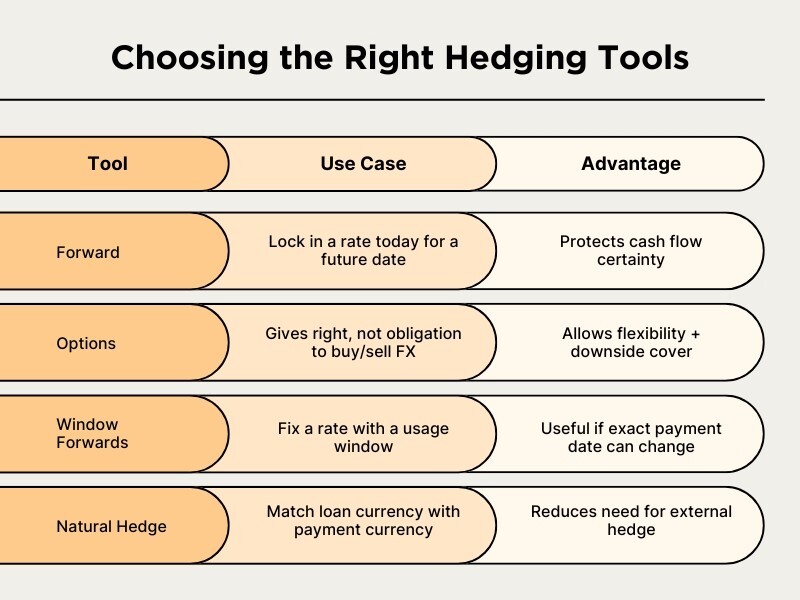
## **Choosing the Right Hedging Tools**
### 
### A Note on MIS and Monitoring
Use a simple MIS to capture:
- Order/invoice dates
- Spot rate on order date
- Realised rate
- Difference vs. expectation
- Hedging costs
This helps track actual vs. expected performance and improves decision-making.
### **Final Takeaways**
- Your forex risk begins when the order is booked, not when money is received.
- A longer trade cycle increases exposure to rate changes and cash flow stress.
- Micro-hedging and aligned financing reduce risk.
- Track forex gains/losses based on your first expectation.
- Use simple tools and MIS dashboards to stay disciplined.
### [FAQ (Frequently Asked Questions)](https://www.helpshift.com/glossary/faq/)
1. How does a trade cycle affect forex risk?
Longer trade cycles mean more time for currency rates to fluctuate, increasing risk.
2. Is forex management only important for exporters?
No, importers also face risks if the currency depreciates before they make payments.
3. What’s the best time to hedge?
From the moment you book an order. Delaying increases exposure.
4. How can I reduce working capital pressure?
Speed up collections, delay payables, and match loans to your trade cycle.
5. What are some easy tools I can use to hedge?
Forwards, options, window forwards, and natural hedges are effective options.
## Related Blog
[ ](https://myforexeye.com/blog/small-hedges-big-wins-heres-how-micro-hedging-beats-the-blanket-approach)
17 MIN READ
### [Small Hedges, Big Wins: Here’s How Micro-Hedging Beats the Blanket Approach](https://myforexeye.com/blog/small-hedges-big-wins-heres-how-micro-hedging-beats-the-blanket-approach)
[ ](https://myforexeye.com/blog/the-hidden-cost-of-doing-nothing-how-ignoring-forex-strategy-can-erode-business-margins)
8 MIN READ
### [The Hidden Cost of Doing Nothing: How Ignoring Forex Strategy Can Erode Business Margins](https://myforexeye.com/blog/the-hidden-cost-of-doing-nothing-how-ignoring-forex-strategy-can-erode-business-margins)
[ ](https://myforexeye.com/blog/dynamic-use-cases-of-various-working-capital-products-for-exports-and-imports)
14 MIN READ
### [Dynamic Use Cases of Various Working Capital Products for Exports and Imports](https://myforexeye.com/blog/dynamic-use-cases-of-various-working-capital-products-for-exports-and-imports)
#### We are regulated
#### SEBI Registration
##### Registered Investment Advisor(RIA)
NISM-202100075147

#### Sub-Broker
AP0091502703

#### CIN
U65910DL2014PTC320897

### Ready to make smarter forex decisions?
Get timely market updates straight to your inbox and WhatsApp.


×
We use cookies to enhance your experience on our website. By continuing to use this site, you consent to the use of cookies in accordance with our [Cookie Policy](javasript:void(0)). You can manage and change your cookie settings at any time.
Reject all cookies
Accept all cookies
×


To sign in Please enter your mobile number
 
Sign in with OTP
Sign in with Password
First time user? Sign up
```json
{
"@context" : "https://schema.org",
"@type" : "BlogPosting",
"author" : {
"@type" : "Person",
"name" : "Ritik Bali",
"url" : "https://myforexeye.com/blog/author/ritik-bali"
},
"dateModified" : "2026-01-29T09:50:28.681Z",
"datePublished" : "2026-01-29T09:50:28.000Z",
"headline" : "What Is the Relevance of the Trade Cycle in Foreign Exchange Management?",
"image" : [ "https://myforexeye.com/hubfs/Blog%2013.jpg" ],
"mainEntityOfPage" : {
"@id" : "https://myforexeye.com/blog/what-is-the-relevance-of-the-trade-cycle-in-foreign-exchange-management",
"@type" : "WebPage"
},
"publisher" : {
"@type" : "Organization",
"logo" : {
"@type" : "ImageObject",
"url" : "https://myforexeye.com/hubfs/logo%20new.png"
},
"name" : "Myforexeye Fintech Private Limited"
}
}
```