Indian Rupee Rebounds after US Tariff Reduction
Today on February 03rd 2026, the Indian rupee recovered from record lows following a trade-related announcement between the United States and India. Rupee strengthened to around ₹90.04–₹90.05 per US dollar, reversing weakness seen in late January after an agreement to reduce US tariffs on Indian goods to 18%, from elevated levels that had reached up to 50% on select categories.
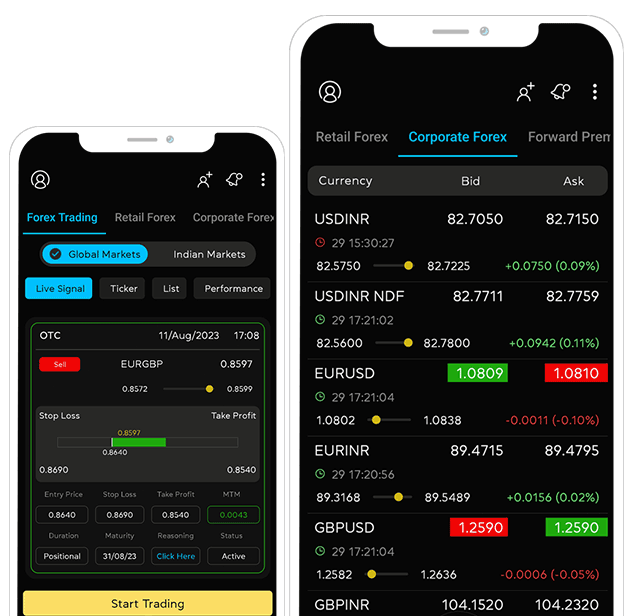
USDINR: Market Reaction
The impact of the tariff announcement was visible in USDINR, the pair fell approximately 1.17% comparing 02nd February 2026 close to 03rd February 2026 open.
Removal of Russian Oil–Linked Penalty: Structural Impact
Prior to the agreement, Indian exports to the US were subject to an effective levy of up to 50%, consisting of a 25% reciprocal tariff and an additional 25% penalty linked to India’s Russian oil imports. Under the revised arrangement, the US has withdrawn the additional punitive duty, leaving only the 18% reciprocal tariff in place.
What Is Confirmed and What Remains Unclear
According to official statements, the reduction of US reciprocal tariffs on Indian goods to 18% is confirmed and effective immediately. However, several broader commitments discussed publicly have not yet been formally verified by Indian authorities.
|
Item |
Status |
|
US tariff reduction to 18% |
Confirmed |
|
Removal of Russia oil–linked penalty |
Confirmed |
|
India ending Russian oil purchases |
Not officially confirmed |
|
Zero-duty access for US goods |
Not officially confirmed |
|
$500 billion US goods procurement |
Not officially confirmed |
*as of 03rd February 2026
Sector Impact Overview
Textiles and Apparel
- Direct beneficiaries of tariff reductions
- Improved pricing competitiveness in the US market
- Enhanced export economics for US-facing businesses
Information Technology and Technology Exports
- No direct tariff exposure
- Benefited from improved macro sentiment
- Lower currency volatility supported earnings visibility
Capital Markets and Financials
- Broad-based equity market participation
- Expectation of increased Foreign Portfolio Investor (FPI) inflows
- Financials and capital goods led index gains
- Improved liquidity and risk sentiment
Sector Winners: Export-Linked Overview
|
Sector |
Primary Benefit |
Key Effect |
|
Textiles and Apparel |
Direct tariff relief |
Improved competitiveness |
|
Engineering and Auto Ancillaries |
Cost alignment |
Supply chain support |
|
IT and Technology Stocks |
Sentiment improvement |
Foreign allocations |
|
Financials |
Risk re-pricing |
Market participation |
|
Gems and Jewellery |
Export visibility |
Price competitiveness |
Relative Positioning in the US Market
Following the tariff revision, India’s effective tariff rate is now lower than those applied to several competing exporters, including Indonesia, Bangladesh, and Vietnam. The adjustment also improves India’s relative position against China and Pakistan in select export categories
Longer-Term Competitive Considerations
- The revised 18% tariff level improves India’s relative position versus key Asian peers
- Reduced trade friction supports export planning and supply chain integration
- Improved trade visibility may support investment flows into export-oriented sectors
Scope and Limitations of the Agreement
The current development represents a targeted tariff reset, not a comprehensive trade agreement. Broader trade, energy, and procurement negotiations remain ongoing, with further clarity expected as discussions progress.
Conclusion
The rupee’s rebound reflects improved external trade conditions following the US–India tariff reduction. Enhanced export competitiveness, reduced trade-related uncertainty, and improved market sentiment supported currency and equity market performance during the period.
While broader macroeconomic factors such as energy prices, fiscal borrowing, and global risk conditions continue to influence currency movements, the tariff adjustment provided measurable relief to trade-sensitive sectors and capital markets.
FAQ (Frequently Asked Questions)
The appreciation followed an announcement to reduce US tariffs on Indian exports, which improved trade visibility and eased external sector pressures.
On an onshore basis, the rupee appreciated by approximately 1.17%, based on the previous close and next-day opening level.
Export-oriented sectors, particularly textiles and apparel, experienced the most direct impact due to reduced tariff-related costs.
No. Only the tariff reduction and removal of the Russian oil–linked penalty have been officially confirmed.
No. Other factors such as oil prices, fiscal policy, and global financial conditions continue to influence currency movements.